Logistics has the most complex mix of work styles. Atendo doesn't ask you to force everyone into one template — rules follow the type of work, not the other way around.
Drivers start their routes before anyone reaches the office — check-in is a phone call or a text message
The warehouse runs three shifts, but manual corrections arrive once a month
HR doesn't know which location a driver started from — only that they're marked "present"
Preparing working-time documentation requires manually gathering data from multiple sources
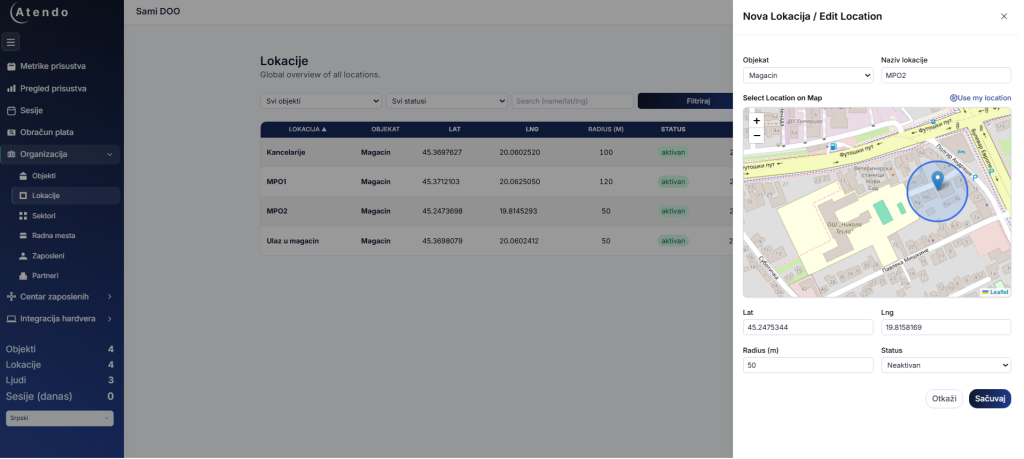
Drivers check in with the mobile app when they start work — the system logs that check-in happened from an allowed location
Warehouse staff use QR terminals or badges — same system, different check-in method
The dispatcher sees who started work and from which allowed location; HR gets unified working-time data
Every employee, every work style — one overview for HR and operations
The same report for the driver who left from home and the worker who walked through the warehouse gate.
It usually starts with one group — field staff or the warehouse. Over 30 days of free use we measure how many manual corrections were eliminated and how much time HR saves on monthly payroll data preparation.
Configuration, rule setup, creating user accounts, and employee training are handled by the Atendo team — from you we need an employee list, a description of work styles, and one person responsible.
Does part of your team work in the field with clients?
See Atendo for field work →A question you could ask Atendo
"Which devices haven't checked in during the last 24 hours?"
How the AI assistant answers →No commitment. Together we check where your current process still depends on manual checks.
Book a free Atendo Audit